
The basic profit formula
Net profit = item price + buyer-paid shipping − marketplace fees − promoted listing fees − postage − packaging and supplies − item cost − other sale costs.
Use the actual transaction and shipping amounts once the order is complete. Before listing, the same formula is a forecast: fee schedules, promotion rates, postage, and taxes can change the result. Keep tax collected and remitted by the marketplace separate from seller revenue when reconciling your records.
Illustrative single-item sale
- Item price: $30; buyer-paid shipping: $5; total received for this example: $35.
- Marketplace and promotion fees: $5; postage: $7; supplies: $1.
- Allocated item cost from the purchase lot: $10.
Estimated net profit: $35 − $5 − $7 − $1 − $10 = $12. The numbers are illustrative, not a fee quote.
Choose the right item cost
If you bought the item alone, use its purchase cost plus directly attributable acquisition costs under your own recordkeeping method. If it came from a collection, assign a share of the lot cost rather than treating the item as free. The cost basis guide shows a simple per-unit example and when it can mislead.
Read profit, margin, and return on cost separately
Profit is the dollar amount left after costs. Margin compares that profit with revenue: in the example, $12 ÷ $35 is about 34%. Return on item cost compares profit with the $10 inventory cost: $12 ÷ $10 is 120%. These answer different questions, so label the measure you use.
Store subscriptions, software, storage, and other overhead also affect business profit. Track those expenses separately and include them when you review the whole business, even if you do not assign each overhead dollar to an individual sale.
Estimate first; reconcile after the sale
- Before listing, enter your expected price, shipping, fees, promotion rate, item cost, and supplies in the free eBay profit calculator.
- After selling, replace estimates with the order, payout, shipping-label, and inventory records.
- Review refunds, adjustments, and shared expenses before using the figure for business decisions.
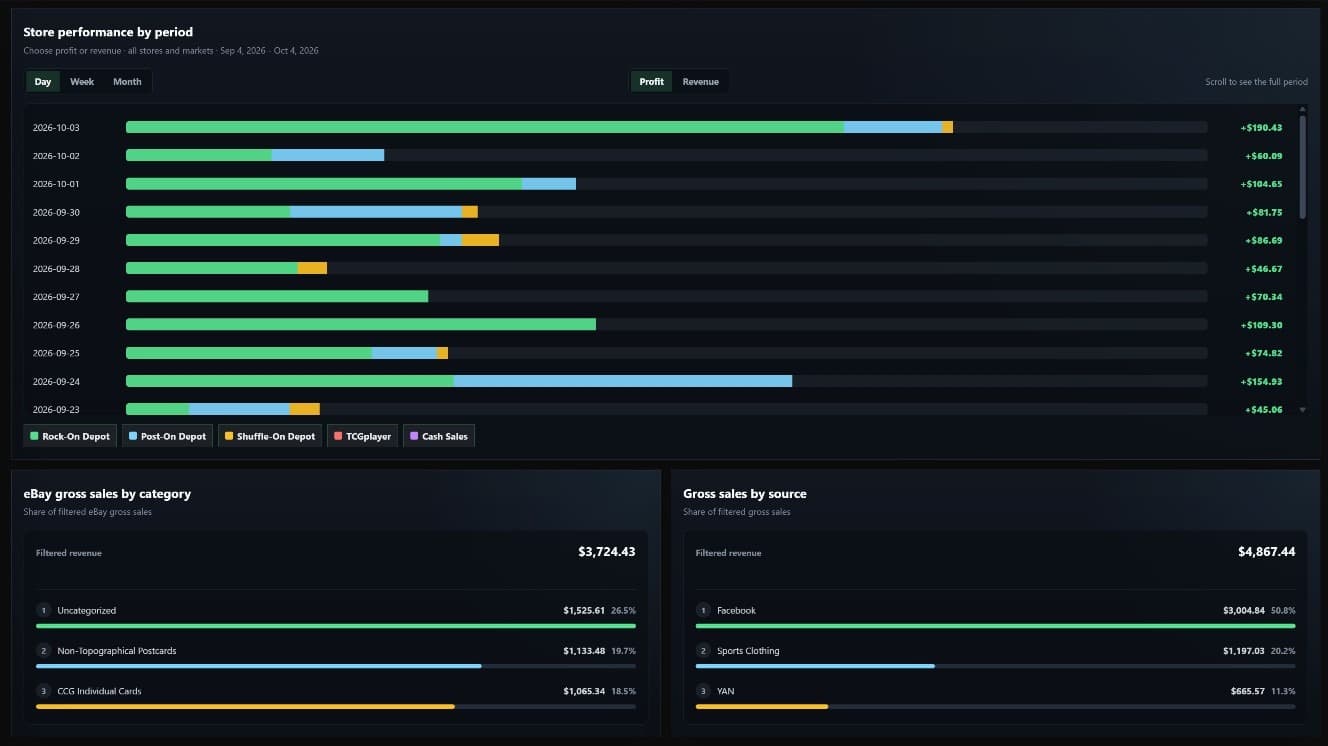
Lots of Lots can link sold inventory to its source lot and show sales and profit reporting. See the product features for the full workflow. This guide is for operational estimates and recordkeeping, not tax advice.
Common questions
Is buyer-paid shipping profit?
It is part of the money coming in, but postage, packaging, and any fees tied to shipping also need to be subtracted. A shipping charge can be above or below the actual shipping cost.
Should I use the listing price or the amount paid?
For a completed sale, use the amount actually paid after any offer or discount. Use a proposed listing price only when forecasting.